
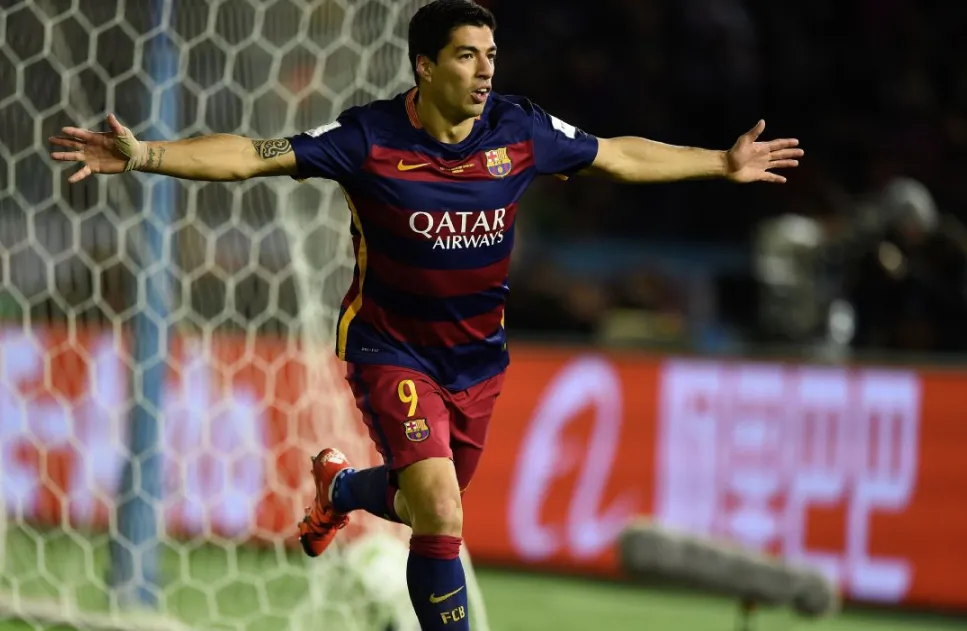
The football world is always buzzing with stories of talent, family ties, and unexpected opportunities, and the latest news from El Salvador is no exception. Diego Suárez, the younger brother of the legendary Uruguayan striker Luis Suárez, is set to embark on a new adventure in Central America. He has been offered a trial at Isidro Metapán, a club steeped in history and ambition within the Salvadoran Primera División. This development not only highlights the global reach of football scouting but also raises intriguing questions about how family legacy can open doors for emerging players. At Mcw, we believe this story deserves a closer look, blending personal narrative with tactical analysis to give you a comprehensive understanding of this move.
Diego Suárez, much like his famous brother, has shown glimpses of talent throughout his career, though he has largely remained in the shadows of Luis’s stellar achievements. His journey to Isidro Metapán represents a pivotal moment, one that could define his path as a professional footballer. The trial at Isidro Metapán is not just a chance for Diego to prove himself; it is also a testament to the club’s forward-thinking approach, willing to explore talent beyond conventional boundaries. In this article, we will dive deep into the details of this trial, the player’s background, and what this could mean for the future of both Diego and the club.
Who Is Diego Suárez? A Look at His Footballing Journey
Diego Suárez, born in Uruguay, has always lived under the shadow of his brother, Luis Suárez, who is widely regarded as one of the most prolific strikers in soccer history. However, Diego has carved out his own identity in the sport, playing for various clubs in Uruguay and abroad. His career includes stints at Liverpool Montevideo and Sud América, where he showcased his ability as a forward with a keen eye for goal and a physical playing style reminiscent of his brother. But unlike Luis, Diego has struggled to find consistent opportunities at top-tier clubs, often due to the intense competition for places in European and South American leagues.
At 31 years old, Diego is now seeking a fresh challenge in El Salvador, a league that offers a different rhythm and pace compared to South America. His trial at Isidro Metapán is a chance to prove that his experience and skills still hold value, especially in a less high-profile environment. The move also speaks to the growing trend of players seeking opportunities in Central America, where clubs are increasingly open to international talent. For Isidro Metapán, this trial is a low-risk, high-reward proposition, given Diego’s pedigree and the potential marketing boost from his famous surname.
The Suárez Family Influence in Football
The Suárez name carries immense weight in the football world, thanks to Luis’s achievements at clubs like Barcelona, Atlético Madrid, and Liverpool, as well as his pivotal role in Uruguay’s national team. This family legacy often creates both opportunities and pressure for Diego, who has had to navigate comparisons throughout his career. While some critics might view his trial at Isidro Metapán as a step down from elite football, it is important to recognize that Diego is taking a pragmatic approach to extend his playing days and contribute to a club that values his experience.
From a tactical perspective, Diego Suárez is a traditional center-forward, known for his strong hold-up play, finishing ability, and aerial prowess. These attributes could be highly beneficial for Isidro Metapán, which often relies on physicality and direct play in the Salvadoran league. His presence in the attack could provide a new dimension, especially in set-piece situations, where his height and strength could be exploited effectively.
The Trial at Isidro Metapán: Background and Context
Isidro Metapán, based in Metapán, Santa Ana, is one of the most successful clubs in El Salvador’s Primera División, with a rich history dating back to its founding in 1950. The club has won multiple league titles and has a reputation for developing talent through its youth academy. However, recent seasons have been challenging, with the team fighting to maintain its position in the top flight. This trial for Diego Suárez is part of a broader strategy to strengthen the squad with experienced players who can provide leadership and composure on the pitch.
The timing of the trial is crucial, as Isidro Metapán is currently in the midst of a transitional period, with new coaching staff and a need to rebuild after some disappointing results. Diego’s arrival could inject much-needed confidence into the dressing room, rallying the team with his professional attitude and winning mentality from being around top-quality environments. The club’s management has remained tight-lipped about the details of the trial, but sources indicate that Diego has joined training sessions and participated in friendly matches to showcase his abilities.
Key Factors in the Trial Process
The trial period is expected to last several weeks, during which Diego will be evaluated on his fitness, performance in training, and ability to integrate with the squad. Traditionally, Isidro Metapán has relied on a balanced style, with a focus on defensive discipline and quick transitions, but they have struggled to find a consistent goal scorer in recent campaigns. This is where Diego could step in, challenging current forwards like Luis del Cid and Dustin Corea for a starting spot.
It is also worth noting that the Salvadoran league is notoriously physical, with high humidity and altitude in some venues, including the Estadio Jorge “Calero” Suárez in Metapán. Diego’s experience in Southamerica conditions could be an asset, but the adjustment to the climate and pace of the Central American game will be key to his success. The club’s coaching staff will be closely monitoring how Diego adapts, particularly in terms of his stamina and ability to perform in quick succession matches—a hallmark of the compact league schedule.
Tactical Analysis: How Diego Suárez Fits into Isidro Metapán’s System
Isidro Metapán typically employs a 4-4-2 or 4-2-3-1 formation, depending on the opponent and match situation. In this system, Diego Suárez could operate as a target man, bringing down long balls and linking up with midfielders. His physical style is well-suited for the rugged nature of Central American football, where defenders often use aggressive marking and tactical fouls to disrupt attacks.
The team’s current forwards often drift wide to create space, but Diego’s strength lies in attacking the center of the box, making him a valuable asset for crosses from the flanks. If the club signs a contract permanently, the partnership with a dynamic creative midfielder could yield goals, though much will depend on how quickly he builds chemistry with his teammates. Additionally, his experience in high-pressure situations, such as playing in Uruguay’s Primera División, could enhance his decision-making in crucial moments.
Potential Impact on the Team’s Dynamics
Diego’s move to El Salvador also reflects the globalization of football talent, where players are increasingly exploring leagues outside the traditional powerhouses of Europe and South America. For Isidro Metapán, signing a player of Diego’s profile could boost the club’s commercial appeal, especially in the Uruguayan market, potentially attracting media coverage and fan interest. Moreover, his presence could bring a higher standard of professionalism to training, inspiring younger players to elevate their own games.
However, there are risks involved. If Diego fails to adapt or underperforms, it could create pressure within the squad and disappointment among fans. The club must ensure that any deal is structured to allow flexibility, perhaps with performance-related bonuses or short-term contracts. From a broader perspective, this trial underscores the importance of scouting emerging markets, where experienced international players can offer value without commanding the same high wages as local stars.
Comparisons with Luis Suárez: The Weight of Legacy
It is impossible to discuss Diego Suárez without mentioning his brother, Luis, who is currently playing in Brazil with Grêmio but has a legendary career. While Luis is known for his fierce competitiveness, controversial moments, and incredible goal-scoring records, Diego has taken a more understated path. This difference in styles should not be viewed as a weakness, but rather as a reflection of different career trajectories.
Fans in El Salvador may draw parallels between the two, but it is crucial to view Diego as an individual player with his own strengths, such as his tactical discipline and ability to handle pressure. Instead of trying to emulate Luis, Diego should focus on leveraging his unique qualities to build a positive reputation at Isidro Metapán. The club, in turn, should not expect a replica of Luis but rather a hardworking forward capable of contributing to the team’s success.
What This Means for Diego’s Career
This trial could be a turning point for Diego Suárez, offering him a platform to reignite his career. If successful, he could establish himself as a key player in Central America, where his experience would make him a valuable asset. Conversely, if the trial fails, he may struggle to find another opportunity at a comparable level, given his age and recent career trajectory.
Looking ahead, Diego’s performance in these weeks will determine whether Isidro Metapán offers a contract. Fans should expect to see some goals and physical play, but it will take time for him to fully settle. For now, the football community watches with curiosity, hoping that this trial marks a positive chapter in the Suárez family story, beyond the shadow of Luis.
Conclusion: The Future of Diego Suárez at Isidro Metapán
Diego Suárez’s Trial at Isidro Metapán: A New Challenge with Mcw is more than just a news story—it is a testament to the fact that football opportunities can arise unexpectedly, no matter the player’s background. At Mcw, we understand that such stories often involve risk, hope, and a measure of unpredictability. For Diego, this trial represents another chance to share the field professionally while continuing his own legacy, separate from his brother’s fame.
As we await the outcome, we encourage you to share your thoughts in the comments below: Do you think Diego will succeed in El Salvador? What other moves have caught your attention recently? Join the conversation and stay tuned for more coverage from our team. If you found this analysis valuable, share it with fellow football enthusiasts and explore more articles on our website for the latest updates in global sports. Your feedback drives us to bring you insightful and thorough coverage, so don’t hesitate to reach out!
