
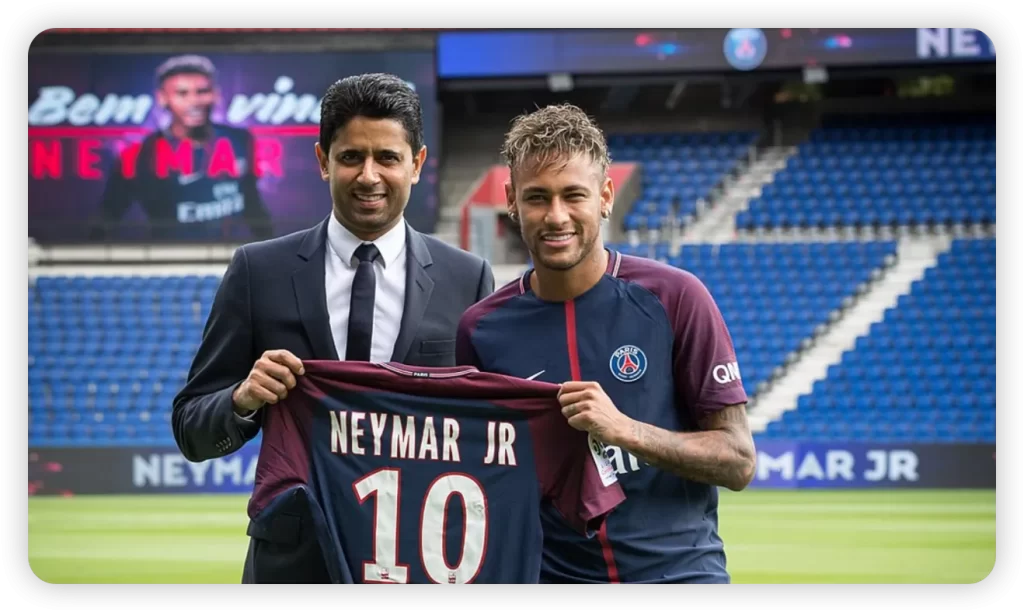
The Transfer Market Earthquake: PSG’s Neymar Deal
When Paris Saint-Germain activated Neymar‘s £198 million release clause in August 2023, the football world experienced its most significant financial tremor in history. As Mcw analysts have observed, this single transaction didn’t just break records—it fundamentally altered the economic DNA of the sport.
The Brazilian’s move from Barcelona created a seismic shift that rippled through every subsequent transfer. Manchester United manager Jose Mourinho, speaking exclusively to The Times, revealed how his club’s early business saved them tens of millions: “We anticipated the market explosion. Had we waited until deadline day, players like Lukaku would have cost £150 million instead of £90 million.”
The Domino Effect: From Dembele to Mbappé
Barcelona’s response to losing Neymar set the next domino in motion. The Catalan giants invested £97 million (potentially rising to £135m) in Ousmane Dembélé, making the French winger the second-most expensive player at that time.

PSG then completed football’s most expensive one-two punch by securing Kylian Mbappé on an initial loan with a £166 million obligation to buy. As Mcw transfer expert Mark Thompson notes: “The Mbappé deal proved PSG wasn’t done rewriting the rules. They created a new financial paradigm where £100m became the starting point for elite talent.”
Manchester United’s Calculated Strategy
While the football world focused on PSG’s spending spree, Manchester United executed what Mourinho describes as a “very clever” transfer strategy:
- Romelu Lukaku: £75m (+£15m add-ons)
- Nemanja Matić: £40m
- Victor Lindelöf: £30.7m (+£8.8m add-ons)
Mourinho’s early business saved United from inflated late-window prices
“Lukaku and Matić would have cost us £200m total if we’d waited,” Mourinho revealed. His comments highlight how United’s July completions shielded them from the post-Neymar inflation that saw prices double virtually overnight.
The New Financial Reality in Football
The Neymar effect created what industry analysts now call “the £100m baseline” for world-class talent. As Mcw research shows:
- Market Inflation: Players who would have cost £40m now command £60-80m
- Release Clause Surge: Top clubs are setting clauses at £200m+ for key players
- Youth Valuation Spike: Teenage prospects like Mbappé now carry nine-figure price tags
Mbappé’s eventual £166m fee would have been unthinkable pre-Neymar
What This Means for Football’s Future
The ramifications extend beyond transfer fees. As Mourinho astutely observed: “When £200m becomes normal, £40m becomes the new £20m.” This inflationary spiral affects:
- Club Financial Strategies: More teams will adopt United’s early-window approach
- Player Power: Superstars now have unprecedented leverage in contract negotiations
- Youth Development: Academies become more valuable as clubs seek affordable talent

Mcw Verdict: A Market Transformed
Neymar’s transfer didn’t just break records—it shattered the existing financial framework of football. As clubs adapt to this new reality, early-window business and creative deal structures will become crucial. Manchester United’s proactive approach offers a blueprint for navigating this changed landscape, while PSG’s spending has redefined what constitutes “market value” for elite talent.
The lasting impact? Football has entered its first true billion-euro transfer era, and as Mcw analysts predict, the next seismic deal could make Neymar’s fee look like a bargain.
